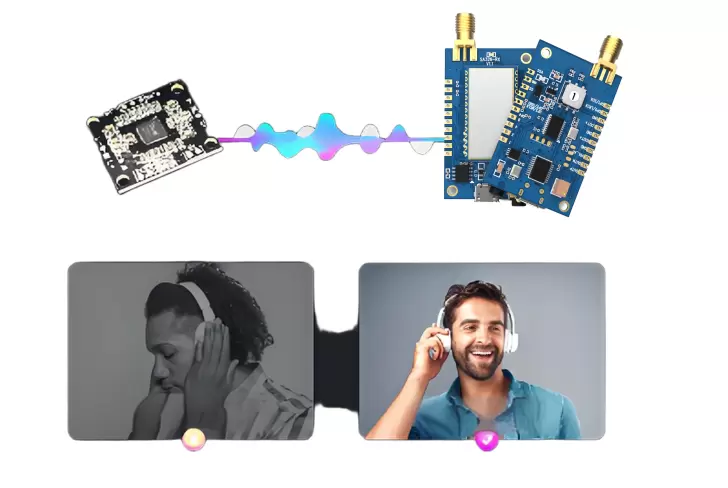
LoRa spread spectrum technology effectively combines low power consumption with long-distance communication. Thanks to its strong anti-interference capability, high reception sensitivity, and robust coverage, this technology has been widely applied in IoT scenarios such as smart cities, industrial automation, and agricultural monitoring. As a key component in embedded wireless communication, LoRa modules provide terminal devices with solutions featuring long battery life, large capacity access, and low development cost, making them an essential communication foundation in IoT systems.
However, with the wide variety and abundant options of LoRa modules available, how should we choose the right one?
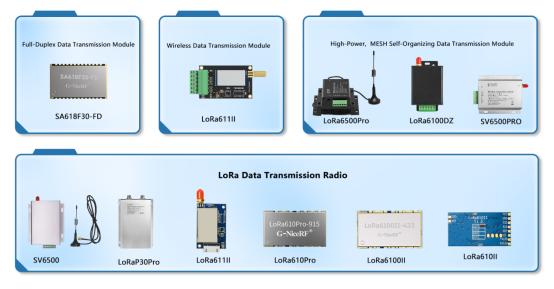
We can evaluate LoRa modules from the following five aspects:
Data Interface: Compatibility and Flexibility
The data interface serves as the communication bridge between the module and the host controller. Different interface types directly affect how the module integrates and the efficiency of development.
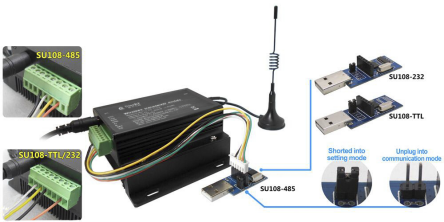
Currently, mainstream LoRa modules commonly use UART, RS232/RS485, TTL, and SPI interface types:
SPI Interface Modules
Connect to microcontrollers via the SPI interface, requiring users to program low-level communication protocols to achieve wireless transmission. SPI offers higher data rates and greater development flexibility, suitable for products needing deep customization.
UART Interface Modules
User-friendly and easy to integrate, these modules connect to the main MCU through a serial port (UART). Simple configuration allows data transmission without requiring users to manage the underlying wireless protocols.
UART can work with different voltage standards such as TTL, RS232, and RS485:
RS232: Point-to-point communication, simple connection, suitable for short-range data transfer.
RS485: Supports multi-point communication, connects multiple devices, longer range, suitable for complex industrial environments.
TTL: Suitable for microcontrollers or embedded devices with simple connections, ideal for short-range, low-power communication scenarios.
Simple and Easy-to-Use Type: Stable and reliable, with almost no packet loss or crashes, ideal for rapid development and large-scale deployment.
Multi-Functional Type: Built-in networking protocols suited for multi-node communication needs; requires minimal configuration to establish network communication, significantly lowering development barriers.
Frequency Band Selection: Avoiding Interference
For domestic applications, LoRa modules mainly operate in the UHF band between 470 MHz and 510 MHz. This band offers good propagation characteristics, providing strong penetration in urban environments and longer communication distances in open areas.
During the design phase, it is recommended to first confirm the final deployment region of the project and then choose the most suitable frequency band based on environmental characteristics and communication distance requirements.
Package Size: Structure and Manufacturing
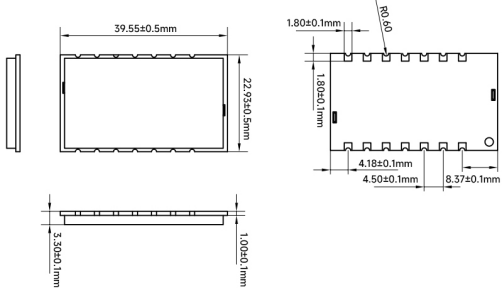
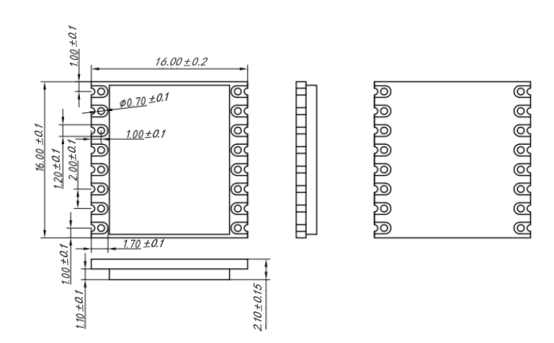
Most Siwei Wireless modules adopt surface-mount packaging, featuring a small size suitable for compact devices such as smart wearables and sensor terminals.
Power Consumption: Battery Life and Performance
Power consumption is a critical factor when selecting IoT devices. The power level of a LoRa module directly affects the device’s battery life, which is especially important for battery-powered applications.
Siwei Wireless offers LoRa modules with various power levels, including 100 mW, 160 mW, 500 mW, 1 W, 2 W, 5 W, and 30 W. Higher power increases communication range but also raises energy consumption; lower power improves energy efficiency, suitable for intermittent communication scenarios.
Communication Distance: Match to Application Environment Needs
Short-distance communication (1–5 km): Suitable for low-frequency data collection scenarios such as smart farms and water management monitoring.
Medium-distance communication (5–10 km): Commonly used in industrial parks, campuses, oil fields, and other medium-sized areas.
Long-distance communication (10–15 km): Ideal for wide-area coverage in sparsely populated regions with difficult base station deployment, such as mountainous or forested areas.
Siwei Wireless LoRa modules provide stable communication performance and, when combined with high-gain antennas and proper installation environments, can achieve high-quality long-range data transmission.
Choosing Precisely Based on Needs
LoRa technology offers an ideal solution for low-power, long-range communication. The appropriateness of module selection directly affects project success. By comprehensively considering five key dimensions—interface type, frequency band legality, packaging compatibility, power consumption, and communication distance—users can quickly identify product solutions that closely match their specific requirements.
Related Reading:
How to Build an Efficient and Stable LoRa Master-Slave Communication System
Multi-Mode Integration: LoRa Wireless Serial Modules Enable Full-Area Coverage
LoRa Serial Communication Module Function Analysis: From Transparent Transmission to Mesh Networking


 English


 +86-755-23080616
 sales@nicerf.com