





Contact us
UWB Pet Electronic Fence System Solution | Long-Range Pet Ranging Technology
11
Mar . 2026
By NiceRF Team
Updated: Mar 11, 2026
1. Overview of the UWB-Based Pet Electronic Fence Solution
With the rapid development of the smart pet device market, users are placing higher demands on intelligent pet activity management, safety, and controllable activity range. Traditional electronic fence solutions, such as GPS or Bluetooth RSSI, have clear limitations in ranging accuracy, response speed, power consumption, and adaptability to complex indoor and outdoor environments. These limitations make it difficult to meet the requirements for long-distance and high-precision pet management in open areas.
To address this market demand, NiceRF has introduced a UWB (Ultra-Wideband)-based pet electronic fence system. The solution supports long-range distance measurement, low-latency control, and multi-pet management, making it suitable for the development of smart pet devices. The system adopts a minimalist hardware architecture consisting of a smart pet collar + handheld remote controller, integrating kilometer-level electronic fencing capability with low-latency remote training functionality.
The system can monitor the spatial distance between the pet and the user in real time with high accuracy. When the pet moves beyond the predefined safety range, the collar can trigger alerts or behavioral guidance within a very short time. This enables both anti-loss protection and behavioral training management. More importantly, it provides pets with a safer and larger activity space in open environments such as large yards, farms, and outdoor camping areas.
2. Product Advantages
- Long-Range UWB Ranging up to 1 km
- Real-Time Distance Monitoring with Low Latency
- Strong Anti-Interference Performance
- Low Power Consumption with Rechargeable Design
- Integrated Pet Fence, Training, and Multi-Pet Management
- Wireless deployment, no construction required, maintaining a clean environment
- Support for multi-pet management, enabling simultaneous control of multiple pets
- Integrated fence protection and behavioral training, multiple functions within a single device
- Rechargeable design, environmentally friendly and convenient without frequent battery replacement
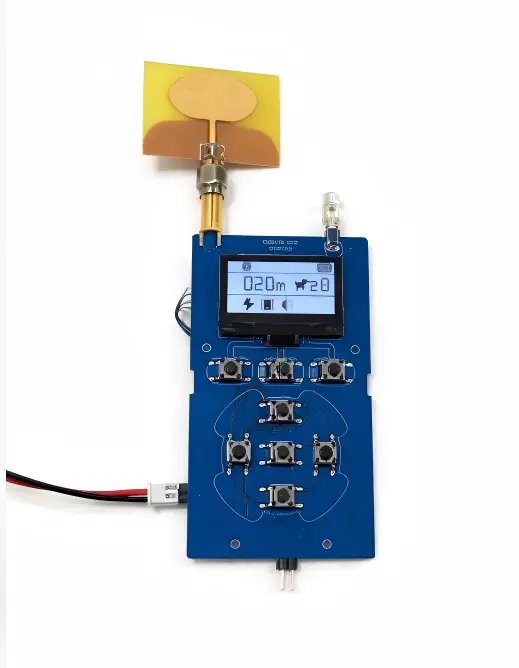
Collar Receiver
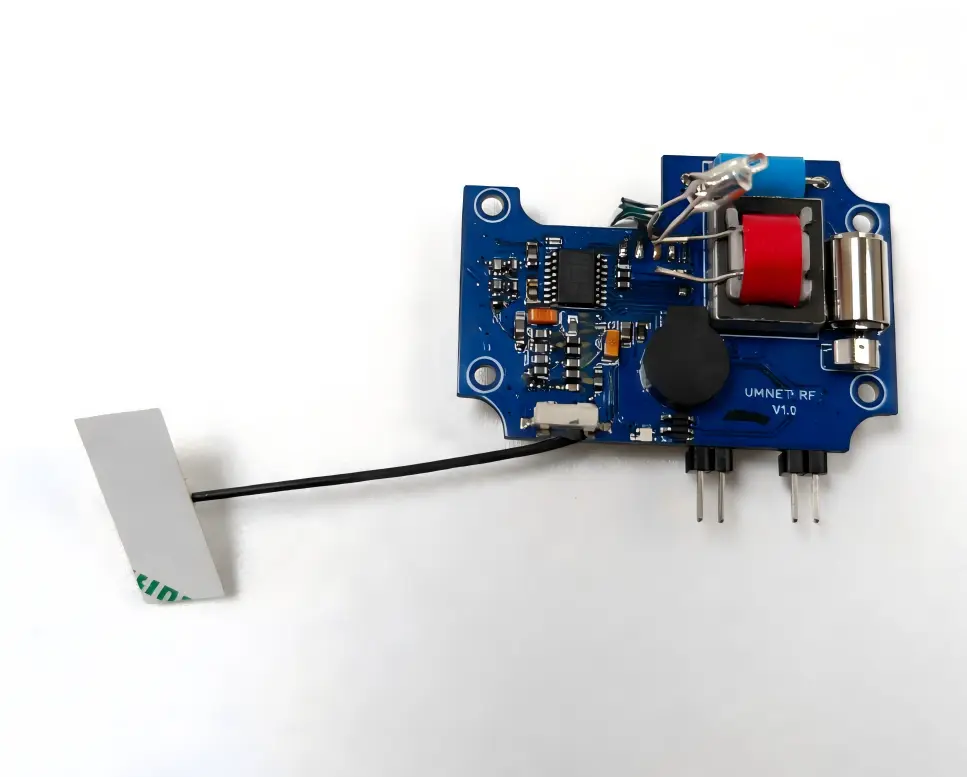
Remote Controller
3. Core Functions of the UWB Pet Electronic Fence System
The core competitiveness of this solution originates from the inherent physical characteristics of UWB technology, which address several limitations of traditional solutions.
| Advantage | Technical Description |
|---|---|
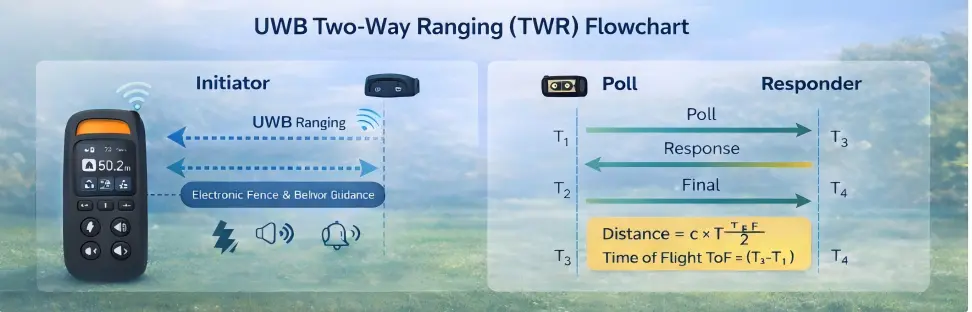
| Long-range ranging | Based on UWB Two-Way Ranging (TWR) technology. In open Line-of-Sight (LOS) environments, depending on antenna design, transmit power, and system configuration, the ranging distance can reach approximately 1 km, making it suitable for large outdoor areas such as farms, forests, and beaches. |
| Real-time distance display and low latency | The LCD screen on the remote controller can display the precise distance between the pet and the user in real time. UWB uses nanosecond-level pulse signals for ranging, enabling extremely low communication latency and allowing boundary detection and command triggering to be completed rapidly. |
| Optimized low-power design | Through optimized operating modes and pulse algorithms, the system maintains very low power consumption while supporting long-range and high refresh-rate ranging, significantly extending the operating time of both the collar and the remote controller. |
| Strong anti-interference capability | The ultra-wide spectrum of UWB signals naturally provides strong resistance to multipath effects and electromagnetic interference. It is not significantly affected by common signals such as Wi-Fi or Bluetooth, ensuring stable ranging performance in complex indoor and outdoor environments. |
| Integrated multifunction design | A single device integrates both electronic fencing and remote training functions, providing a highly integrated hardware solution capable of supporting diverse pet management requirements. |
| Wireless and easy deployment | The system uses wireless communication and requires no physical wiring or network configuration. Users only need to place the collar on the pet and can quickly create or adjust safety boundaries through the remote controller. |
4. Technology Comparison: UWB vs. GPS and Bluetooth Pet Tracking Solutions
Compared with other mainstream technologies on the market, UWB demonstrates significant advantages in pet management applications.
| Comparison Dimension | UWB Solution (This Project) | GPS Solution | Bluetooth RSSI Solution |
|---|---|---|---|
| Ranging Distance | ≥1 km (LOS environment, depending on antenna and system configuration) | Global coverage | 10–80 m |
| Real-time Performance / Latency | Ranging based on nanosecond pulse signals, enabling extremely low communication latency | Second-level latency (higher delay) | Higher latency with unstable readings |
| Power Consumption | Low | High | Relatively low |
| Interference Resistance | Strong | Susceptible to obstruction from buildings or trees | Highly susceptible to interference and multipath |
| Indoor/Outdoor Applicability | Suitable for both indoor and outdoor environments | Outdoor open-sky environments only | Suitable for both indoor and outdoor environments (better indoors) |
| Real-time Distance Monitoring | Supported | Supported (via mobile App) | Supported (via App, readings may fluctuate) |
5. Application Scenarios
This solution can be widely applied in the following scenarios, helping B-side customers develop competitive smart pet products.
5.1 Home Yards and Villa Areas
Users can set up an invisible electronic fence around their yard, allowing pets to move freely within the boundary. If a pet attempts to leave the yard, the collar will trigger an alert immediately, helping prevent pets from getting lost or entering hazardous areas such as roads or neighboring properties.
5.2 Outdoor Camping and Hiking
In open environments such as parks, beaches, mountains, or campsites, the handheld remote controller can serve as the center to quickly create a temporary safety zone. Even in areas without mobile network coverage, pets can still be effectively monitored outside the user's line of sight.
5.3 Professional Dog Training Institutions
Trainers can use the system for precise boundary training. The instant vibration or sound feedback provided in remote control mode can also serve as an effective tool for professional behavioral training, such as recall training.
5.4 Farm and Ranch Working Dog Management
For users managing working dogs (such as sheepdogs or guard dogs), kilometer-level ranging capability provides an effective solution. Owners can monitor the approximate distance of their dogs within large operational areas and issue remote commands or recall instructions.
6. System Architecture & Principle
The system consists of one handheld remote controller and up to three pet collar receivers. The remote controller serves as the control center and user interface, performing real-time bidirectional distance measurement with one or more pet collars through UWB wireless technology.
6.1 System Architecture
As shown in the figure, the electronic fence system consists of one remote controller and up to three pet collar devices. The remote controller uses UWB (Ultra-Wideband) technology to perform precise positioning and distance monitoring of the pet devices.
Users can set a safe distance between the pet collar and the remote controller on the controller, which serves as the boundary of the electronic fence. When the pet moves beyond the configured range, the system can trigger preset alerts or guidance actions, including vibration alerts, buzzer alerts, or electrical stimulation prompts.
In addition, users can manually trigger functions such as electric stimulation, vibration, or buzzer alerts through the remote controller, allowing the system to be used for remote behavioral training and guidance of pets.
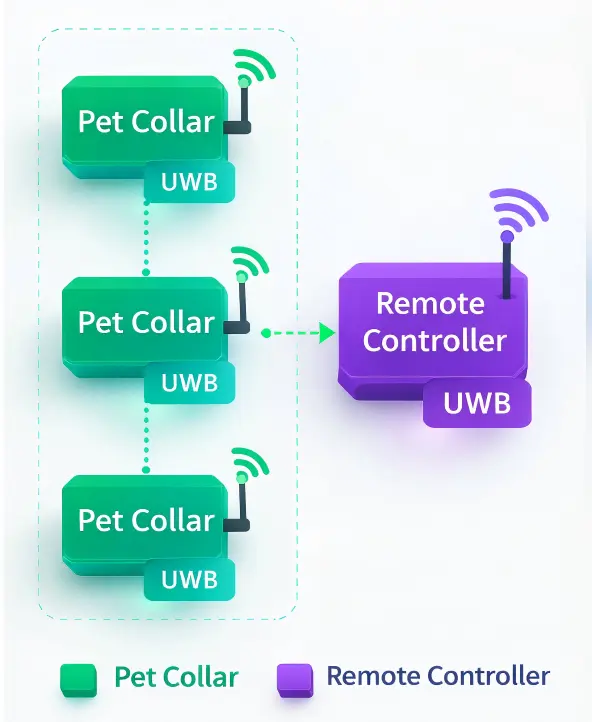
Figure 1: System Architecture
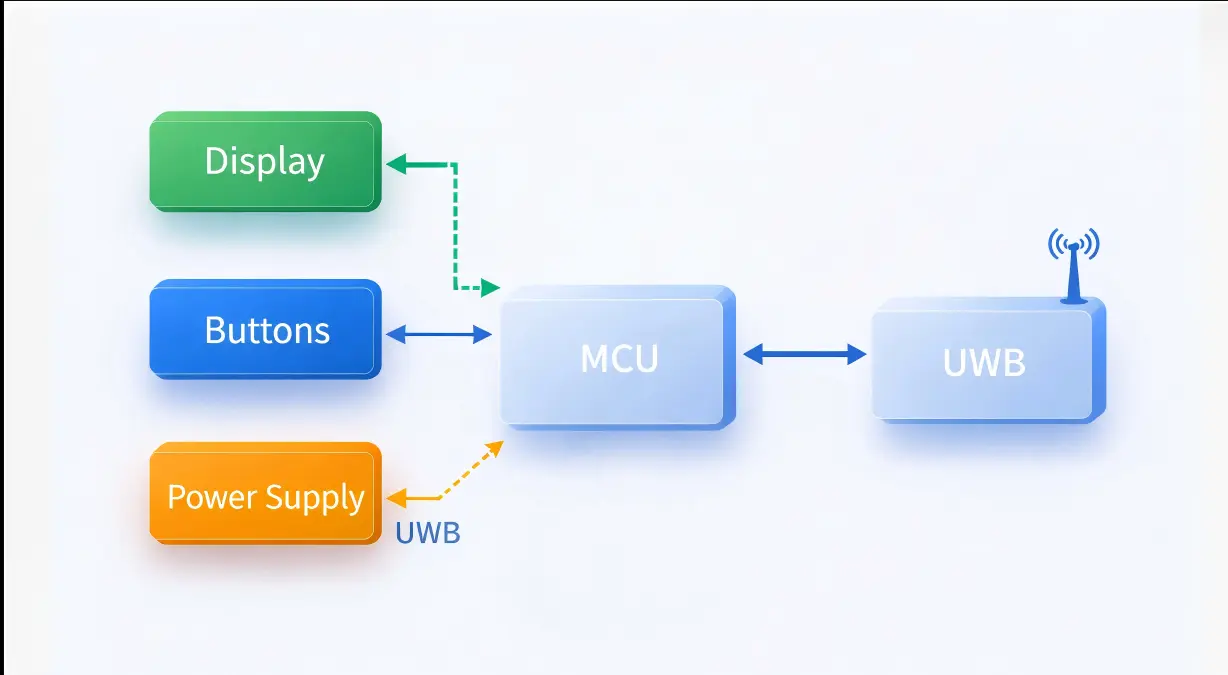
Figure 2: Remote Controller Module
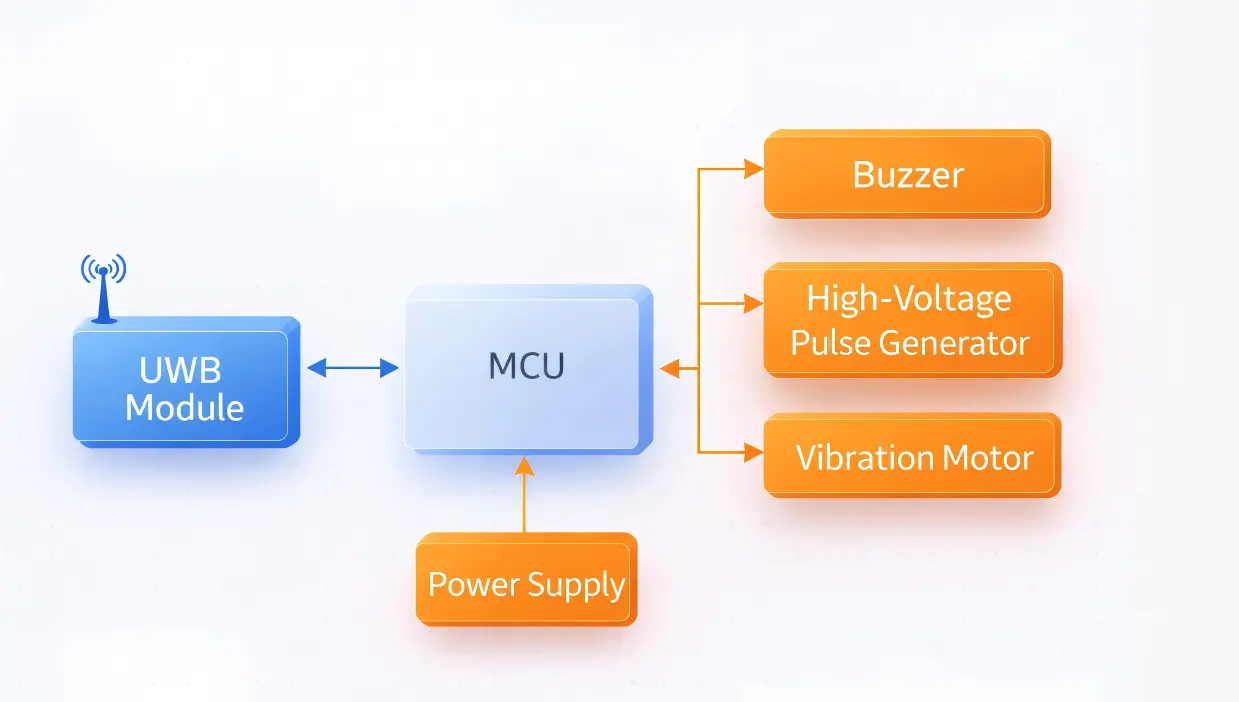
Figure 3: Pet Collar Module
· Fence Mode
Users can set a safety distance on the remote controller (for example 50 m to 1000 m). The system continuously monitors the distance between all paired collars and the remote controller at high frequency. If any pet moves beyond the defined boundary, the collar will automatically trigger preset guidance actions (such as vibration, beep, or mild stimulation) to guide the pet back to the safe zone.
· Remote Mode
At any time, users can manually select a specific pet collar through the remote controller and trigger vibration, beep, or stimulation functions for immediate behavioral intervention or routine training.
7. Cooperation Model
We provide flexible cooperation models, allowing customers to choose according to their product development plans and R&D capabilities.
- PCBA Module Supply
Provide validated core UWB ranging and control modules that can be quickly integrated into your own product design. - Complete Technical Solution Licensing
Provide full technical documentation including hardware design, embedded software, and system architecture for customized product development. - Joint Design and Development
Work closely with the NiceRF engineering team to develop innovative products based on our mature technology platform and tailored to your brand positioning and market requirements.
8. FAQ
Q1: What is a UWB pet electronic fence system?
A: A UWB pet electronic fence system uses ultra-wideband ranging technology to measure the real-time distance between a pet collar and a remote controller. When the pet moves beyond a predefined range, the system can trigger alerts or behavioral training signals.
Q2: How does UWB positioning accuracy compare with GPS?
A: UWB technology can achieve centimeter-level ranging accuracy at short to medium distances, while typical GPS positioning accuracy is usually around 5–10 meters.
Q3: What is the maximum distance of a UWB pet electronic fence system?
A: In open line-of-sight environments, depending on antenna design and system configuration, the ranging distance can reach approximately 1 km.
Q4: Can the UWB system manage multiple pets simultaneously?
A: Yes. A single remote controller can communicate with up to three pet collar receivers, enabling simultaneous monitoring and control of multiple pets.
Q5: Is UWB suitable for both indoor and outdoor pet tracking?
A: Yes. Due to its strong resistance to multipath and interference, UWB technology can operate reliably in both indoor and outdoor environments.
9. Conclusion
The UWB pet electronic fence (UWB pet fence) is a pet management system based on ultra-wideband ranging technology, enabling real-time distance monitoring, electronic fence control, and remote behavioral training.
Compared with traditional GPS pet trackers or Bluetooth-based positioning devices, the UWB pet ranging system provides clear advantages in terms of accuracy, latency, and interference resistance.
With its strengths in long-range ranging capability, positioning accuracy, low latency, and system reliability, UWB technology is becoming an increasingly important solution for smart pet devices.
Choosing the NiceRF UWB Pet Electronic Fence System Solution means building your product on a mature, stable, and reliable technological foundation. We look forward to working with you to bring smarter, safer, and more flexible pet management experiences to pet owners worldwide.
Contact us today to obtain the detailed technical white paper and cooperation plan.
Contact Us
 +86-755-23080616
 sales@nicerf.com
Website: https://www.nicerf.com/
Address: 309-315, 3/F, Bldg A, Hongdu business building, Zone 43, Baoan Dist, Shenzhen, China
Related Products