





Contact us
SA618 Full-Duplex Wireless Headset Intercom Solution
18
Mar . 2026
By NiceRF Team
Updated: Mar 19, 2026
I. Project Overview
This solution is designed for professional intercom equipment manufacturers. It presents a wireless intercom headset system based on full-duplex communication technology.
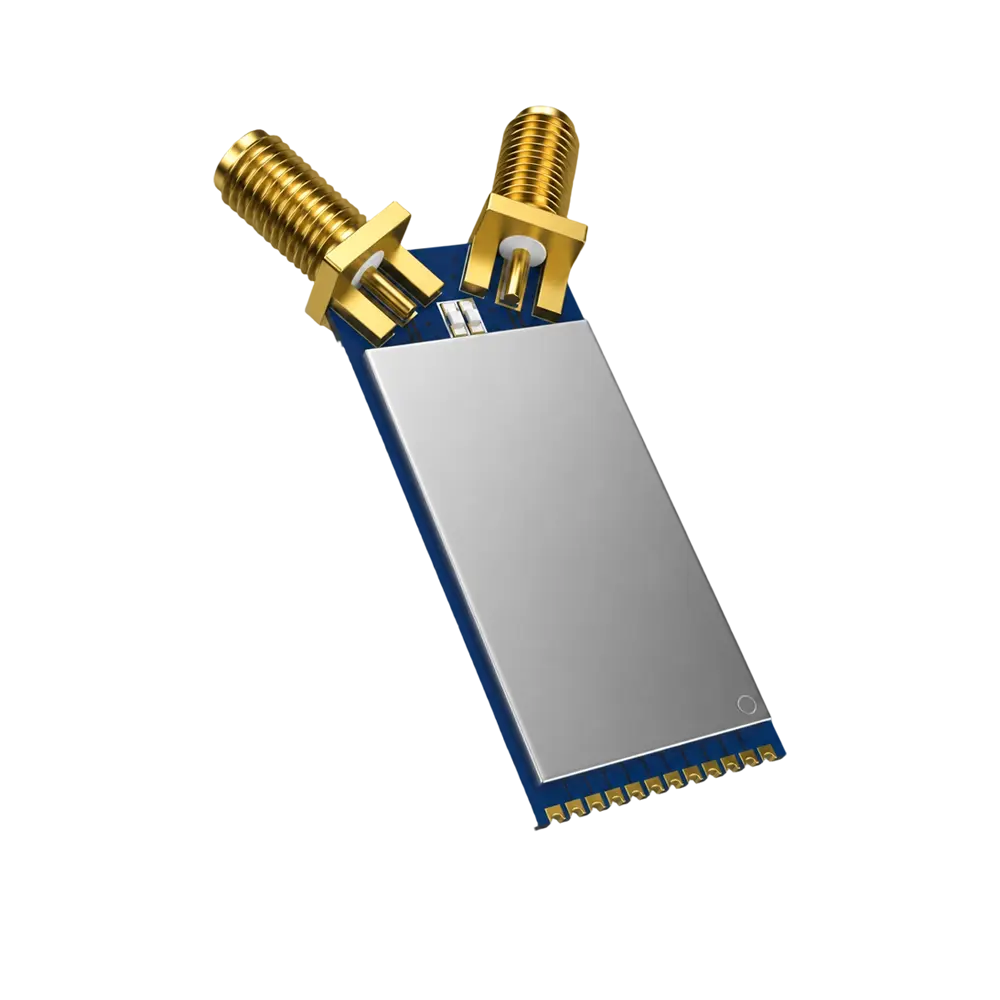
The system integrates our proprietary SA618F30 Wireless Audio Module into an all-in-one structure combining an over-ear headset with a rotatable microphone boom.
Unlike traditional half-duplex intercom devices, this solution requires no external host unit and supports real-time full-duplex voice communication for up to 8 users simultaneously over long distances with clear audio quality. The "wear-and-go" headset form factor enables hands-free operation, significantly improving communication efficiency and convenience in complex application scenarios.

II. Key Features
- Full-Duplex Intercom: Supports up to 8 simultaneous online users, enabling real-time push-to-talk-free communication with low latency (approximately 120 ms on 2 channels).
- 16 Selectable Channels: Channel selection via rotary encoder switch; supports multiple independent communication groups with no cross-group interference.
- Linear Volume Control: Equipped with a rotary potentiometer for smooth, continuous volume adjustment.
- Touch-Based Mode Switching: Long-pressing the touch key cycles through Intercom Mode, Priority Mode, and Mute Mode, accompanied by voice prompts.
- Microphone Boom Power Switch: Rotate the microphone boom to 45° to power on; rotate to 180° to power off.
- Low Battery Alert: When battery is critically low, the system issues a voice alert every minute and provides a warning before automatic shutdown.
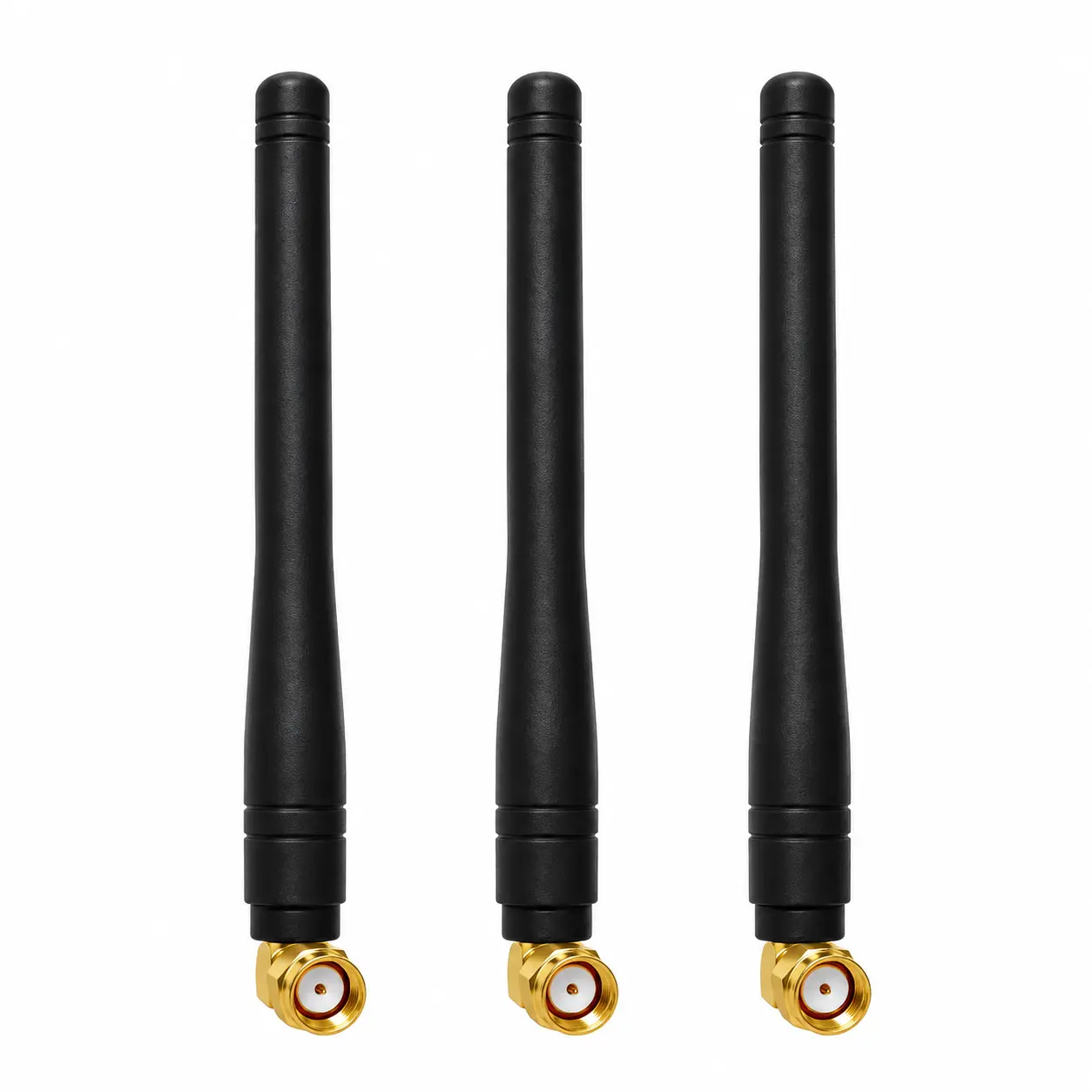
- Long-Range Transmission: Built-in spring antenna enables communication distances of up to 500 meters in open environments.
- Charging & Battery Life: Built-in 1,100 mAh lithium polymer battery; charges fully in approximately 1.5 hours via Type-C interface; supports over 8 hours of continuous operation.
- Status Voice Announcements: Power-on, channel switching, and mode switching operations are accompanied by voice feedback in Chinese or English.
- Type-C Charging Interface: Supports reversible insertion; red indicator light during charging, green indicator light when fully charged.

III. System Topology
1. Full-Duplex Architecture Without Priority Control
This architecture adopts a decentralized communication model, suitable for peer-to-peer communication scenarios such as team collaboration and outdoor operations.
- Full-Mesh Topology: Bidirectional real-time voice links are established between any two nodes. All users can simultaneously listen and speak without waiting for the channel to become idle.
- Concurrent Communication: All online users can transmit and receive voice simultaneously, enabling real-time multi-party two-way communication.
- Decentralized Network: The network has no central master node, eliminating channel contention and waiting. Each user's voice data stream is transmitted independently and mixed at the receiving end of other users. This architecture supports up to 8 users within coverage range for low-latency real-time interaction.
The following diagram illustrates a 5-user example of a full-duplex voice network without master-slave priority:

2. Priority-Controlled Communication Architecture
This mode is designed for applications with a clear command hierarchy, such as dispatch control and safety management.
- Master Control Authority: One device in the network (e.g., Commander A) is pre-assigned the highest communication priority.
- Forced Mute Mechanism: When the master device activates its microphone, the system automatically suppresses the microphone input of all subordinate devices (Users B, C, D, etc.), placing them in a "receive-only" state.
- Interference Prevention: This mode effectively prevents signal overlap caused by multiple simultaneous speakers, ensuring that critical commands are delivered clearly and without interruption to all members. It is well-suited for command and dispatch scenarios requiring a defined instruction hierarchy.

IV. Hardware System Block Diagram
The system is composed of the following functional modules:
| Module | Component |
|---|---|
| Core Module | SA618F30 Wireless Audio Module |
| Main Control Unit | MCU (Microcontroller Unit) |
| Audio Path | Microphone (MIC) → Audio Codec → SA618F30 → Speaker (SPK) |
| Power Management | Battery (1,100 mAh Li-Polymer) → PMU → Module Power Supply |
| Charging Interface | Type-C Port → PMU |
| Human-Machine Interface | Rotary Encoder (Channel Selection), Rotary Potentiometer (Volume), Touch Key (Mode Switching), Microphone Boom (Power On/Off) |
| Wireless Interface | SA618F30 → Spring Antenna (RF) |

Supplementary Notes on Priority Mode:
This mode effectively prevents signal overlap caused by multiple simultaneous speakers, ensuring that critical commands are delivered clearly and without interruption to all members. It is well-suited for command and dispatch scenarios with a defined instruction hierarchy.
- Exclusive Master Control: One pre-designated device (Radio A) holds the highest communication priority in the network and has exclusive voice transmission rights while its microphone is active.
- Forced Mute Mechanism: When Radio A activates its microphone, the system automatically mutes the microphone input of all other subordinate devices (Radio B through D), placing them in "receive-only" mode.
- Interference Prevention: This mode effectively prevents signal overlap from simultaneous multi-user speech, ensuring that critical instructions are transmitted clearly and without interruption to all members. It is applicable to command and dispatch scenarios requiring a strict instruction hierarchy.
V. Notes (Engineering Parameter Disclaimer)
The communication range, latency, and battery life parameters referenced in this solution represent typical test values. Actual performance may vary depending on the operating environment, electromagnetic interference, antenna configuration, and usage conditions.
Contact Us
 +86-755-23080616
 sales@nicerf.com
Website: https://www.nicerf.com/
Address: 309-315, 3/F, Bldg A, Hongdu business building, Zone 43, Baoan Dist, Shenzhen, China
Related Products