

 English


Contact us
HOME > ABOUT US > PRODUCT INFORMATION > HOW FAR CAN A SIGNAL GO? HOW LONG DOES A BATTERY L...
How Far Can a Signal Go? How Long Does a Battery Last? Let's Talk About the Core Performance Trade-offs of LoRa Modules
15
Oct . 2025
By NiceRF Team
Updated: Oct 15, 2025
When choosing a LoRa module, the datasheet can be a dizzying array of parameters. But at the end of the day, we're really concerned with two main questions: How far can the signal actually travel? And how long can a single battery last?
In this article, we'll take a deep dive into the core technical specs that determine these two key outcomes, helping you understand the nuances behind the numbers and make smarter trade-offs in your actual deployments.
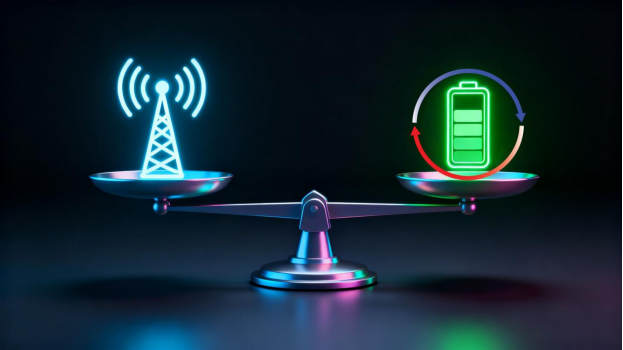
How Far Can the Signal Go? Let's Calculate the 'Link Budget'
The term "Link Budget" might sound technical, but it's a simple concept: it's the total "allowance" you have to work with to get a signal from point A to point B. The bigger the budget, the more signal loss you can overcome, and the farther your communication distance will be.
Transmit Power (Tx Power): How 'Loud' is the Signal?
Standard Power Modules (+22dBm): Like the LoRa126X and LoRa1121, these are sufficient for most urban applications.
High-Power Modules (+33dBm): Such as the LoRa126XF30, which uses a power amplifier (PA) to make the signal over 12 times "louder"! In theory, this can increase the communication distance by about 3.5 times, making it ideal for gateways that need wide-area coverage.
Receiver Sensitivity (Rx Sensitivity): How 'Sharp' is the Hearing?
Receiver sensitivity measures the module's ability to "hear" weak signals. It's a negative number, and the smaller it is, the "sharper" the hearing. Advanced modules can achieve -148dBm, which is top-of-the-line in the industry.
But here's a key trade-off: Sensitivity is inversely related to data rate. The best-case sensitivity you see in the datasheet is usually measured at the slowest data rate. If you choose a faster data rate (like SF7) to save power or for real-time needs, the sensitivity might drop by 10-12dB, which will directly impact your communication distance. So, don't just look at the best-case value; consider the performance in your actual use case.
How Long Will the Battery Last? Let's Do a Detailed Power 'Audit'
For battery-powered devices, predicting battery life isn't about looking at a single current parameter; it's about the total energy consumption.
Current Consumption in Different States
Sleep Current: For devices that "sleep" most of the time, like water meters, this is the most important parameter. Modern modules can achieve 1-2µA, which is the foundation for a battery life of several years.
Receive Current (Rx Current): Around 5-10mA.
Transmit Current (Tx Current): Directly linked to transmit power. At +22dBm, it's about 110mA, but for high-power modules above +30dBm, the current can surge to over 500mA.
Total Energy Consumption: The Key is 'Time-on-Air'
A common mistake is to only compare current values. Total Energy Consumption = Current × Time. A variable that has a huge impact on total consumption is the "Time-on-Air."
For example: Two modules have the same transmit current, but Module A can send its data in half the time (e.g., by using a faster data rate). In this case, Module A's energy consumption during the transmission phase is only half of Module B's, because it can go back to "sleep" faster.
Therefore, to accurately predict battery life, you must consider your application scenario (e.g., "how often do I send data, and how much at a time?") and calculate the total energy required to complete one communication cycle at your chosen data rate.
Contact Us
 +86-755-23080616
 sales@nicerf.com
Website: https://www.nicerf.com/
Address: 309-315, 3/F, Bldg A, Hongdu business building, Zone 43, Baoan Dist, Shenzhen, China
Related Products