Introduction
Do you also hate the frustrating radio lag? Half-duplex systems are oftentimes very annoying. You can talk without interruption with full duplex audio and there are no delays. We aim to build a timeless full duplex audio module guide for you. This guide is very detailed, explaining system architecture, Mesh networking, and integration.
What Makes Full-Duplex Superior To Half-Duplex?

Have you ever had to say "Over!" when using a traditional radio? This common phrase highlights why half-duplex bottlenecks are so incredibly annoying for users. Ask any professional team how they feel about communication delays when using a full duplex communication mode.
It almost seems impossible to fix; however, the full duplex communication mode makes seamless talk possible because it works just like a phone call. Everyone is able to speak and listen at the same time. You will no longer experience those frustrating delays when using the full duplex audio module communication system. From my own experience on film sets, the switch from half-duplex to a full duplex audio module cut our coordination time nearly in half.
This is precisely why we developed the wireless audio transmitter and receiver module. Even better, our advanced full duplex walkie talkie systems also operate in a complete full duplex mode.
Defining The Full Duplex Intercom System Architecture!
This chapter will elaborate on the technology; therefore, you will learn exactly how the full-duplex architecture works.
· Two-Way Channels
Basic audio duplex simply means having two concurrent pathways which allow for bidirectional data flow. You can imagine a two-way highway where one lane sends audio (Tx) and the other lane receives audio (Rx), so this dual-channel design actively prevents signal collisions. This specific method is used effectively in our G-NiceRF wireless audio module. This process ensures that your audio stream is a full duplex audio module stream and free flowing, so you have dependable and simultaneous communication.
· Frequency Separation
So, how do signals stay from crossing and mixing with each other? A number of systems use frequency separation, which means there is a different frequency for the transmit (Tx) signal and a different frequency for the receive (Rx) signal, which stops the signals from disturbing each other.
This method is a normal means of achieving clear full duplex audio. According to RF electronics expert Joe Carr, "Frequency-division duplexing (FDD) is a foundational method where the transmitter and receiver operate at different carrier frequencies," which is exactly this principle in action. For example, our modules might use 433MHz for Tx and 450MHz for Rx, and this simple separation guarantees a clear and simultaneous transmission.
· Mesh Networks
What if you need significantly more range for your operations? This specific problem is solved by using Mesh networks. In this system, individual devices serve as relays, and they pass signals from one node to another. This design greatly increases the total area of your network and it also creates a network that self-repairs. If one node happens to go down, the signal will automatically find a new route to take. Modules like our G-NiceRF modules, such as the SA628F22, utilize Mesh technology, which provides incredible strength to our walkie talkie module.
· LoRa Technology
Our modules use the latest LoRa Technology chipset to maximize the scope of distance communication while minimizing energy consumption. Because battery operation is essential to many portable devices, LoRa is ideal because it consumes very low energy. Our modules use a lora audio transmitter that ensures stable audio links, even in complex topographies. This technology results in clear voice transmission over very long distances.
· 1.9GHz/2.4GHz
Other systems are designed to operate in dedicated frequency bands, like 1.9GHz or 2.4GHz, which are very conducive to exchanging information at high rates. However, these specific bands are often very congested with other device traffic. For instance, using P-2-P communication in a busy conference is a classic full duplex mode example of a congested environment. Our G-NiceRF modules, including the SA618 series, operate in more flexible UHF bands like 420-510MHz, which enhances the available communication range and minimizes 2.4GHz interference.
Architecture | Core Principle | Primary Benefit | Mechanism / Example | G-NiceRF Spec / Model | Primary Use Case |
Two-Way Channels | Bidirectional flow | Prevents collisions | Separate TX/RX paths | G-NiceRF Module | Core Duplex Comm. |
Frequency Separation (FDD) | Different TX/RX Freq. | Stops interference | TX @ 433MHz; RX @ 450MHz | (SA618/SA628) | Clear, simultaneous audio |
Mesh Networks | Nodes relay signals | Extends range; Self-repairing | Signal hopping | SA628F22 | Large area coverage |
LoRa Technology | Long range modulation | Low power; Max distance | LoRa chipset | (SA618/SA628 Series) | Battery-powered devices |
UHF Bands | Flexible spectrum | Better range; Low interference | 420-510MHz | SA618 Series | Industrial; Long range |
1.9GHz / 2.4GHz | High data rate bands | High speed | (Wi-Fi/DECT bands) | (Avoided) | Short range; High data |
Full Duplex Audio Module: System Architecture Comparison!
Analyzing The Half-Duplex Communication Bottleneck!
Let’s examine half-duplex and its problems so you will understand clearly the shortcomings of this method.
· PTT Latency
Push-to-Talk (PTT) is defined as a basic communication function, but in this case, it proves to be the most troublesome. When the PTT button is pressed, radio devices must operate in a half-duplex mode, and this creates completely broken communication. It has been proven that a half-second gets lost when one side speaks. I can personally attest, from my experience in high-stakes event security, that the half-second lag from PTT is the most dangerous silence during an emergency. Losing this second is valuable in any scenario, but especially in safety ones. Zero-PTT full duplex devices satisfy the above criteria because there is no lag and communication is immediate.
· Turn-Taking
Users must take turns talking on a half-duplex system, which is not natural and actively hinders the free expression of thoughts. It becomes impossible to break in to ask a question, and it is also impossible to provide feedback in a timely manner. Teams must observe the strict “over” protocol, which interferes with coordination. This limitation turns easy activities into difficult processes, but any half-duplex issue is resolved with a full duplex system.
· Communication Lag
Communication is often patchy and fragmented because of the half-duplex system. Only one user can transmit a message at a time without interruption. When more than one user presses the PTT button, their signals clash, and this makes the audio completely unclear. Missing and repeating messages becomes the new reality, which is a significant waste of precious time. This issue is avoided with a full duplex audio system, as they allow simultaneous sending and receiving of messages to attain full clarity.
· Simplex Mode
Even more primitive than half-duplex is simplex mode, which is purely one-directional. This mode is like a broadcast from a radio or a signal from a keyboard. There is no possibility of answering back, so a half-duplex system is one step better. But only the full duplex communication mode allows true two-way, simultaneous talk. Any team that seeks genuine interactivity with its members would only pick full duplex audio.
Boosting Team Efficiency With A Full Duplex Intercom System!
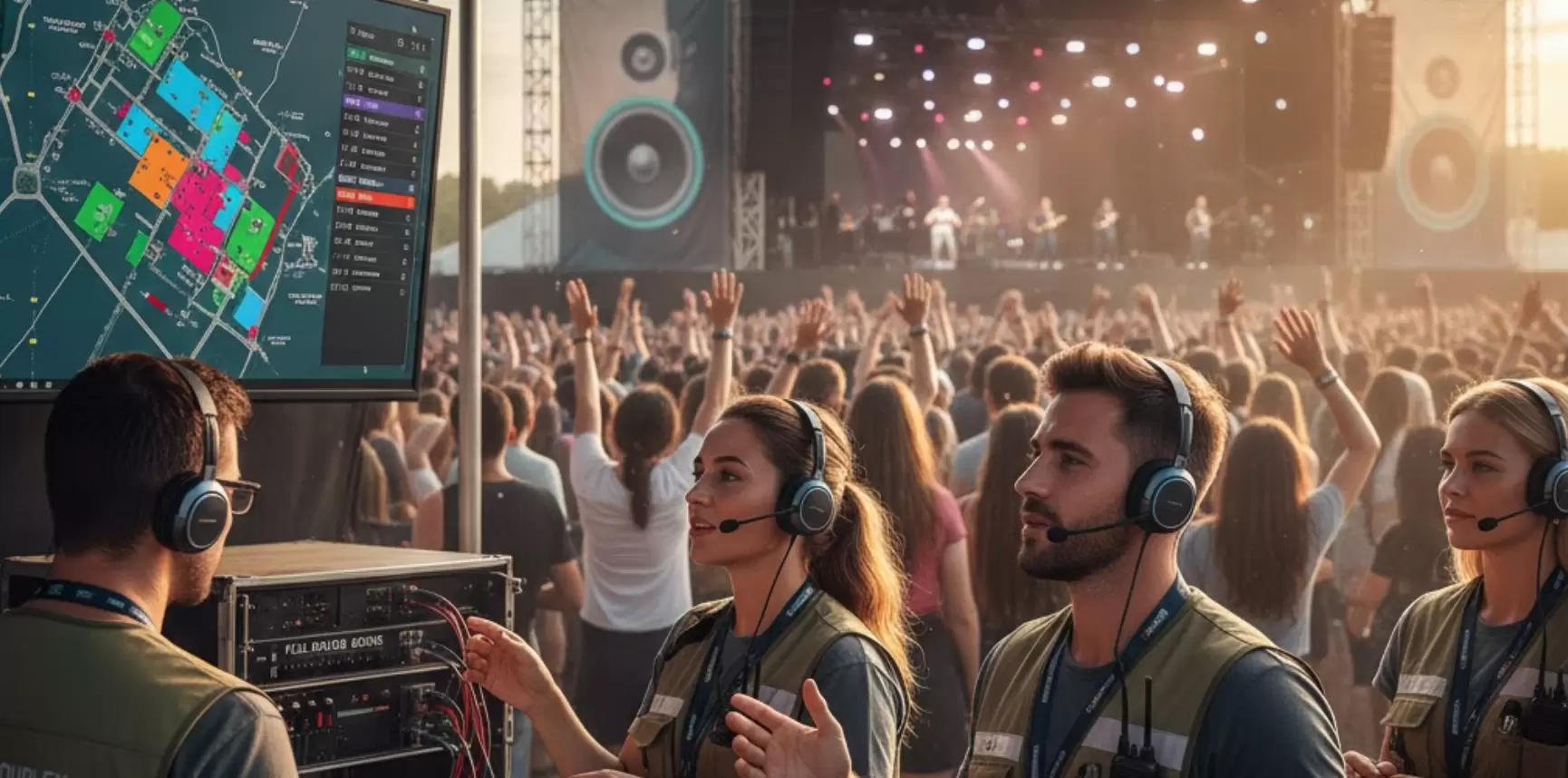
You can see how having full duplex systems in place increases productivity, as teams achieve clarity in their speech which translates to more results. I remember managing event coordination for a music festival; the half-duplex radios were a nightmare of missed cues until we switched to a full duplex audio module system.
- Industrial Safety: Life-saving alerts can be distributed in an instant, and this is only achieved using full duplex walkie talkie systems that allow for hands-free coordination in real-time.
- Event Coordination: The control of attendees is seamless, and attendees do not miss a second with our wireless audio transmitter and receiver module.
- Film Production: Every second counts on a film set, so to avoid annoying lags during key moments, our wireless audio module ensures a seamless audio experience.
- Training Scenarios: In our training modules, trainees can ask trainers questions and get live feedback, so learning with the full duplex mode is a fascinating experience.
- 95dB Clarity: No one can miss a word at a noisy industrial site with a full duplex audio module. More than the value of our modules, the high clarity with which they speak is something every user should experience.
Examining Critical Full-Duplex Technical Specifications!
Every project is unique, and the value of our G-NiceRF modules lies in the specifications required for every project.
· ENC Noise Reduction
You can forget difficult, noisy sites because noise is the last thing one should be worried about. Our modules use advanced Digital Signal Processing (DSP) to ensure echo cancellation, which greatly improves the full duplex audio quality. Your clear voice is the only thing the other person can hear.
· 1000m Range
Every module has a purpose, and the lora audio transmitter on our modules maintains an audio range of one kilometer in open areas. We have even tested the SA628F39 module up to 6 kilometers. This long range is the perfect value which can be added to an agriculture site, smart cities, and other large sites.
· PD Fast-Charge
Battery life is absolutely critical for portable full duplex devices, so all our modules have been designed for low power. This design enables prolonged field use, allowing you to design systems with extended battery life. This feature equates to lower charge cycles and increased uptime, so your walkie talkie module can operate for the entire shift.
· IP65 Rating
Your items have to be tough enough for the real world. All our modules have been designed for reliability and compliance with sealed RoHS and Reach, which proves they are safe and reliable. They can be used in handheld devices that are ruggedized for professional use in extreme industrial or outdoor conditions.
· 8-User Support
Now you finally have the ability for true team talk, as some modules in our range allow the connection of 8 transmitting devices at the same time. The receiver range is unlimited, which makes this feature ideal for team use. Systems can be designed for cycling teams, conference calls, or fire rescue, ensuring everyone is in the loop.
What is the process for choosing the right module? You should concentrate on these four important factors for the application relevant to you.
· Scalability (Users)
How big is your team, and do you need 2 users or maybe up to 8 users? Our modules, like the SA618F30-FD, support 8 concurrent transmitters, which works perfectly for large teams. A full duplex system must handle your user load, so G-NiceRF provides options for both small crews and large events.
· Battery (80h)
Mobile devices require a long battery life, and a good full duplex mode example is a mobile intercom that is used all day. Our mo dules utilize LoRa chips which are low-powered, and they also have sleep modes. This capability allows you to design products which have great battery performance, so your users remain connected for long periods.
· Range (LOS)
At what distance do you need to communicate, considering we carry out module tests in metropolitan regions? Our tests to communicate in full duplex over long distance revealed a stable range of 6 km in our SA628F39 tests. Ensuring the mobility of communication without interruption during any speech is a distinct benefit of our services. It is always advisable to verify the Line of Sight (LOS) details and make a range and power (1W or 8W) parity calculation.
Integrating Your Full Duplex Intercom System!
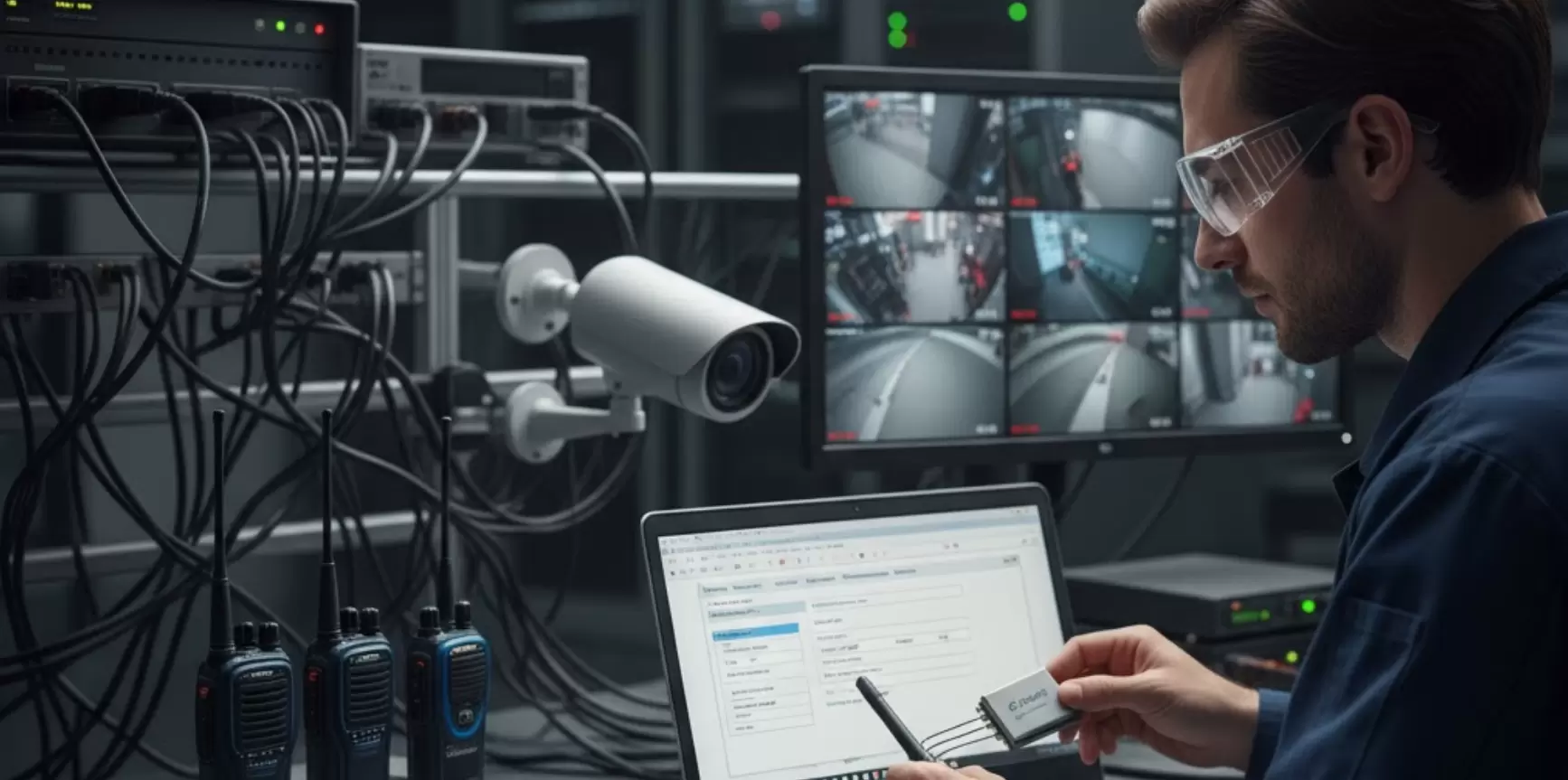
· Mesh Networking
Now you have the module, and integration is made seamless with G-NiceRF's range of features. Constructing a system spanning a large area is straightforward because our modules offer multi-tier wireless Mesh networking. These modules allow configuration as routers or nodes, creating a self-healing network and expanding range beyond a singular point. This feature greatly enhances the scalability of the full duplex audio module integration.
· OTA Upgrades
You can enhance the longevity of your modules, as the SA618 series has the feature of over-the-air (OTA) updates. This enables you the flexibility of sending firmware wirelessly and patching devices without needing to haul the devices back. This is a major time and cost saver, and it ensures your fleet of full duplex walkie talkie devices is always up to date.
· Access Control
Every device must first be configured, so the SA628F22 module is equipped with USB ports. Thus, you can use our proprietary, user-friendly, Windows-compatible software to configure system parameters with ease. As such, you can swiftly change wireless audio transmitter and receiver module frequency parameters, giving you unparalleled control over your network.
· CCTV Sync
How does audio interconnect with other systems? Our multifunctional modules, configured with I2S digital audio and analog audio interfaces, are capable to interconnect with diverse systems. Thus, it is possible to interface simple analog microphones as well as advanced digital coded microphones, which streamlines your hardware integration.
FAQs!
We are ready to offer responses, and as such, here are frequent questions and answers we offer about full-duplex technology.
What Is Full Duplex Vs Half Duplex?
In full duplex audio, you can listen and talk simultaneously, much like on a telephone. Half-duplex audio is turn-taking like a two-way radio where you must push a button to talk, while simplex audio is one-way, and the full duplex system is best for natural conversations.
How Does a Full Duplex Device Prevent Echos?
Full-duplex devices have echo cancellation; a microphone records your voice, but it also records the sound from the speaker. A Digital Signal Processor (DSP) analyzes this, subtracting the speaker's audio from the mic signal to avoid feedback. The only voice you ultimately hear is from the other user.
What is The Maximum Range (Line of Sight) for Intercoms?
The range is determined by the full duplex audio module and its surroundings. Our G-NiceRF modules with LoRa technology achieve long distances; for example, the 1W SA628F30 gets 1km in open space. Our 8W SA628F39 module was tested under stable conditions with a 6km range, and these ranges are also extendable with Mesh networking.
Does Full Duplex Support Over 8 Users?
Yes, our enhanced modules, such as the SA618F30-FD, are meant for multi-user teams. They can support 8 devices transmitting simultaneously, and the limit for the receiving devices is infinite. This capability is ideal for conference calls, film crews, and training sessions.
Do Mesh Systems Need A Base Station?
No, base stations are not needed for our advanced Mesh systems. Each walkie talkie module can serve as a node or as a router. Users of the system can work in a self-organizing module within a peer-to-peer network. This feature enhances the strength of the system, and it also streamlines system deployment. A central hub is not required, which significantly reduces spending on infrastructure.
Conclusion
Half-duplex systems are clearly inferior to the clear audio stream and zero PTT lag of a full duplex system. G-NiceRF modules provide Mesh networks, long range, and 8-user support. The optimal choice is a dependable full duplex audio module. Are you prepared to enhance your system? Visit G-NiceRF today.


 English


 +86-755-23080616
 sales@nicerf.com

