

 English
Wireless Sensor Monitoring System: Data calibration function
NiceRF independently developed a wireless network multi-point sensor monitoring system. How to operate temperature calibration?
Dec . 2025
Do you need precise tracking because you demand absolute reliability for safety? Operations need a strong UWB indoor positioning system, so learn key technical details here. You will master deployment steps to beat standard wireless limits and save battery power. Maximize efficiency for your team and start your new success plan right now.

You must demand absolute reliability in your current real-time location system for safety. Standard signals often fail in complex sites because of walls, shelves, and equipment. However, a reliable UWB indoor positioning system solves this problem effectively for you.
It utilizes a sturdy UWB tag and a fixed UWB anchor for stability. Consequently, you achieve safety in warehouses and operational efficiency becomes much easier. Furthermore, the question of what is UWB tracking becomes clear through these results. You reduce operational downtime significantly when you choose to implement this plan.
Therefore, implementing this UWB tracking plan is vital for your daily success. It optimizes asset management and reduces your flaws to improve efficiency greatly. Thus, G-NiceRF helps you unlock true operational potential with the right tools.
You will discover the core functionalities that determine the efficiency of your system. Here are the key attributes that drive these advanced tracking solutions for industry.
You need to adhere to the official UWB positioning standard for best results. It is the only way you can have true global interoperability today. In particular, the IEEE 802.15.4-2020 standard details the physical layer for your devices. This standardization ensures uniform performance across the board for every single unit. Moreover, it is able to facilitate secure UWB range measurements for you.
For this reason, you ensure the seamless interconnection of your devices completely. You dodge proprietary lock-in and keep your options open for the future. Hence, this technical foundation is important because it allows for excellent wireless communication.
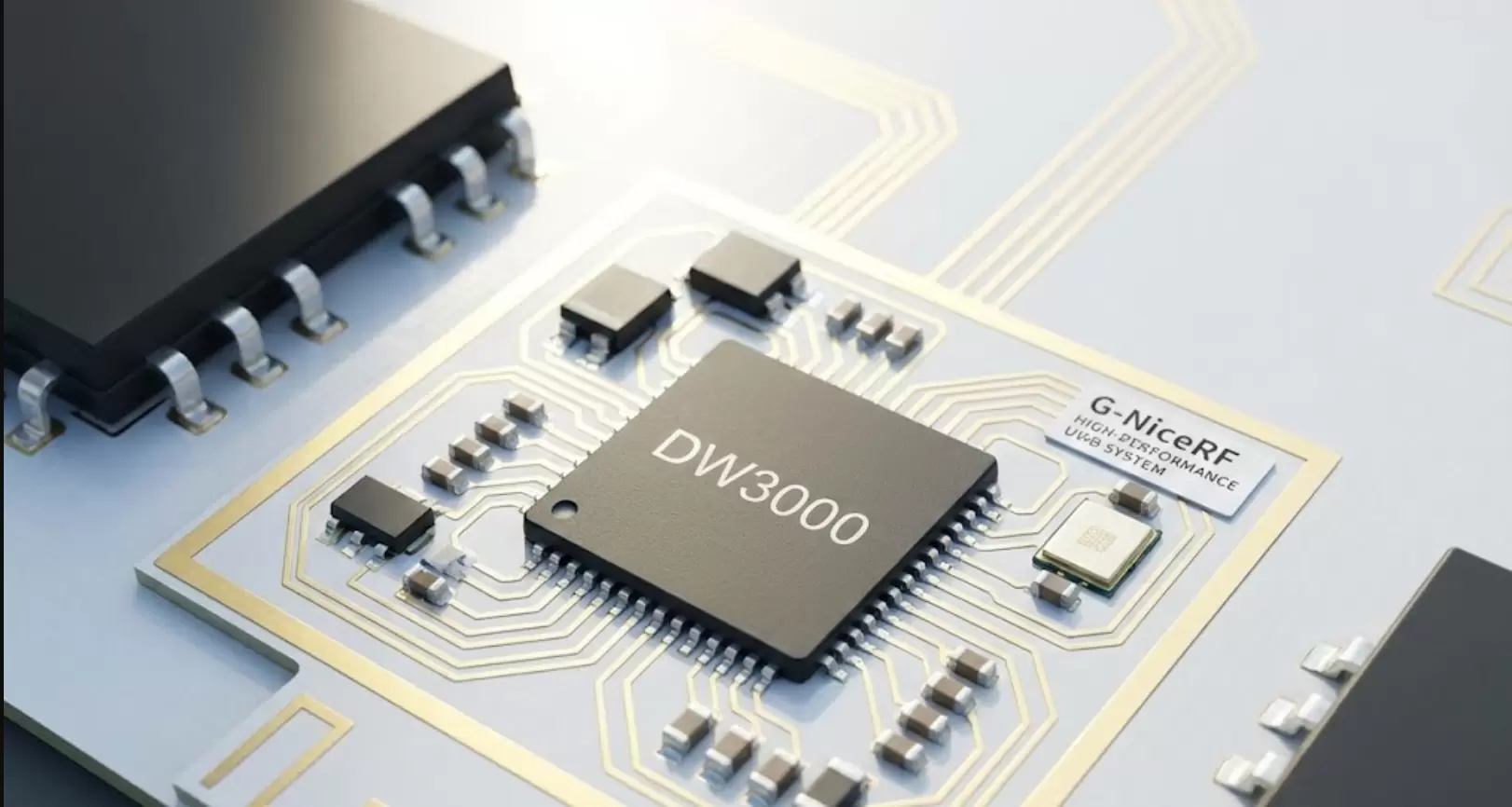
You reap the benefits of the advanced UWB indoor positioning module custom design. It leverages the powerful DW3000 IC series from Qorvo for better performance. This single-chip solution reduces the total form factor of your tracking device. Also, it adds efficiency by integrating a transceiver directly into the unit. The UWB tag gets smaller and becomes much easier to deploy everywhere.
As a result, there is a significant drop in power usage for you. You attain performance on the higher end of the spectrum every time. For this reason, this chip is a hallmark of cutting-edge technology today. It enables seamless integration of positioning systems to various devices effectively.
You require low latency for data transmission in a real-time location system. This system enables a fast 6.8Mbps data transmission rate for your operations. It allows for low airtime usage and keeps the network clear. Additionally, it offers more than enough capacity to manage the RTLS traffic. As a result, you are able to have real-time tracking for multiple items. The network does not crash even when you have many active devices. Also, it is a significant improvement over previous systems you might use.
Data is transferred effortlessly and without any major delays for you. You are able to receive data updates in real-time instantly.
There is a high level of clarity obtained with ultra-short pulse technology. This technology works through pulsing at nanosecond levels for high precision. These nanosecond pulses are extremely narrow and cut through the interference. This is why UWB accuracy achieves such a high level in complex sites.
The UWB pulses overcome multipath interference that usually confuses other standard signals. The signals do not overlap, so you get a clear reading. As a result, you get a better sense of time and distance. The spectrum is considerate to time, so reflection errors are not present. This gives you 100% confidence in the location data you receive.
There is a need for accurate location data on UWB indoor positioning. This technology achieves 10-centimeter accurate positioning for your critical operational needs. This level of precision removes the potential for collisions and achieves safe automation. Tracking of assets is executed reliably and leads to a reduction of errors. This improves overall space management compared to standard Wi-Fi estimates you use. Have you ever wondered why your current system misses targets by meters? This level of accuracy is what G-NiceRF brings to you. You gain total control over your environment and improve safety standards.
Category | Component / Standard | Technical Specification | Signal Characteristic | Operational Benefit | System Impact |
Protocol Architecture | IEEE 802.15.4-2020 | Physical Layer Definition | Secure Range Measurements | Global Interoperability | Non-Proprietary Foundation |
Hardware Core | Qorvo DW3000 Chip | Single-Chip Transceiver | Integrated RF Design | Low Power Consumption | Compact Form Factor |
Data Throughput | High-Speed Transmission | 6.8 Mbps Data Rate | Low Latency Transfer | Low Airtime Usage | Real-Time RTLS Updates |
Signal Physics | Ultra-Short Technology | Nanosecond Pulses | Multipath Rejection | Time Domain Analysis | Interference Resistance |
Location Accuracy | Precision Tracking | 10cm Granularity | Exact Spatial Data | Collision Avoidance | Safe Automation |
Network Stability | Dense Device Traffic | Multi-Node Capacity | Non-Overlapping Signals | Crash-Resistant | Seamless Interconnection |
High-Performance UWB Indoor Positioning Technical Specifications Matrix!
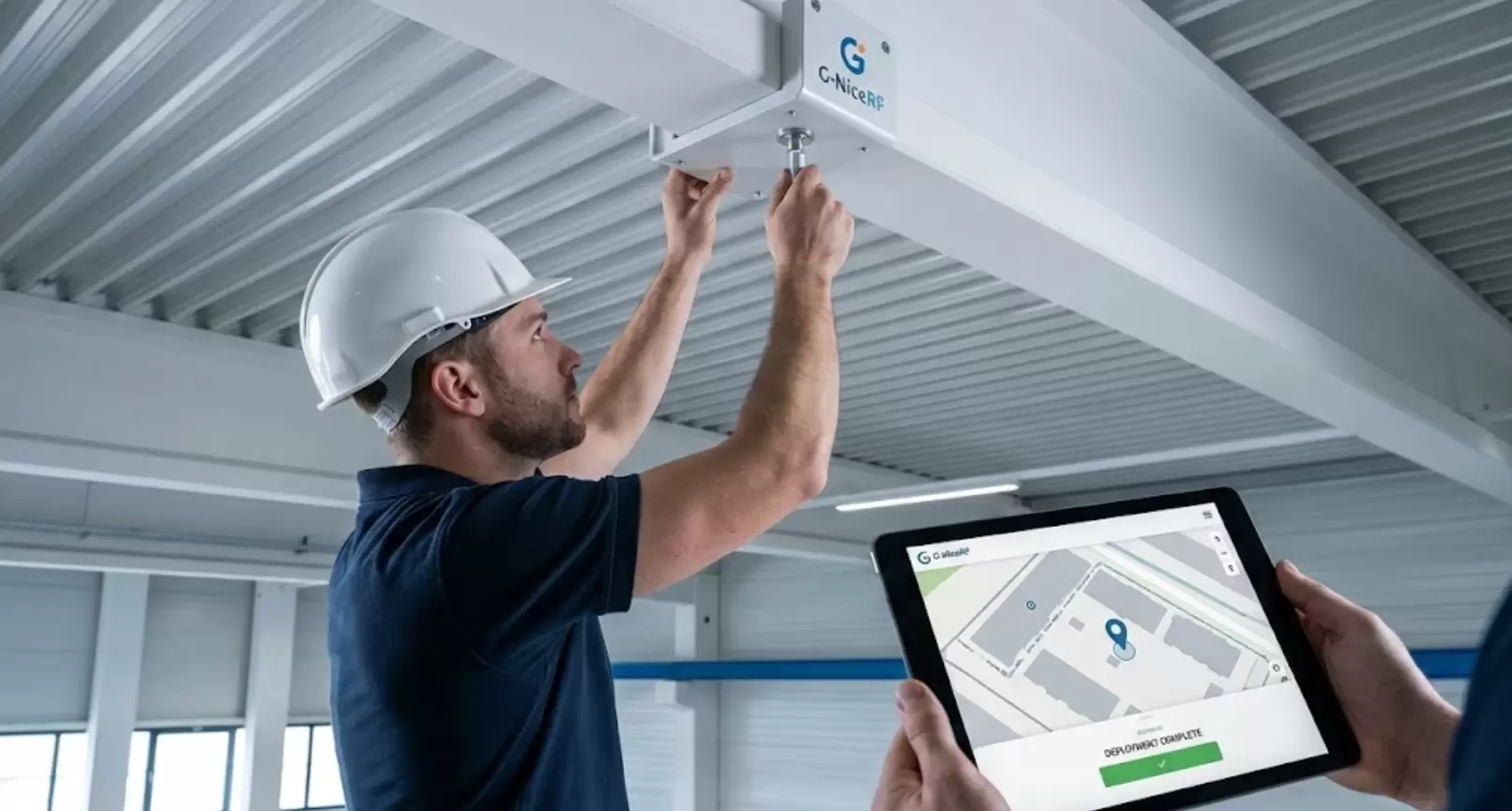
The purpose of this section is to provide an efficient method to install. You can follow this practical guide to install and configure your network.
The section starts with the correct UWB positioning geometry for your site. Ideally, a three-point planar method is used for the best results. This is what is referred to as three stations in a triangle. This gives you a planar area to cover for accurate calculations.
Consequently, this geometry fixes positions so no blind spots exist for you. Full coverage is ensured, allowing the system to work perfectly everywhere. I once saw a warehouse operation halt completely because of a single signal dead zone. Therefore, proper planning prevents these issues and ensures total reliability.
Make sure you mount every UWB anchor properly in your specific facility. Place them high up to ensure they have a clear view. This ensures there are no obstructions in the line of sight. Additionally, remove any metal objects that could interfere with your UWB range.
This installation is important because it ensures the signal can travel unobstructed. You allow yourself to maximize the range of the coverage area. You maintain a stable infrastructure that does not fail under pressure. Thus, your system remains robust and reliable for years to come.
Next, you configure your mobile UWB tag devices to ensure uniformity. This step ensures that the data is uniform throughout the system. First, you set the IDs of the tags to prevent overlap. Then you check the signal strength and adjust for the environmental factors.
This is done so that the system determines an accurate location. UWB accuracy stays high and you avoid common tracking mistakes. This helps to eliminate any erroneous outputs for your tracking team. Therefore, reliable tracking is achieved for the assets in the system.
The system utilizes the ultra-wideband positioning math known as TDoA. It operates using the Time Difference of Arrival methodology to determine position. It does this by tracking the timing of the signal carefully. Furthermore, it compares the arrival times in a sequence to calculate position.
With this, you can pinpoint the coordinates in a 2D space. You determine the location of the tag with high precision. This is an excellent system for determining the location of dynamic targets. Therefore, moving targets update quickly and the system maintains its precision.
You connect the UWB indoor positioning system data to your applications. Transfer the data to the apps using the software interfaces provided. You visualize the map and manage the workflow to make decisions. Furthermore, the decisions made are data-driven and improve your operational speed.
This step is what adds value to the entire hardware setup. Therefore, you manage the operations and see the real-time moving dots. This is what makes the RTLS really useful for your business.
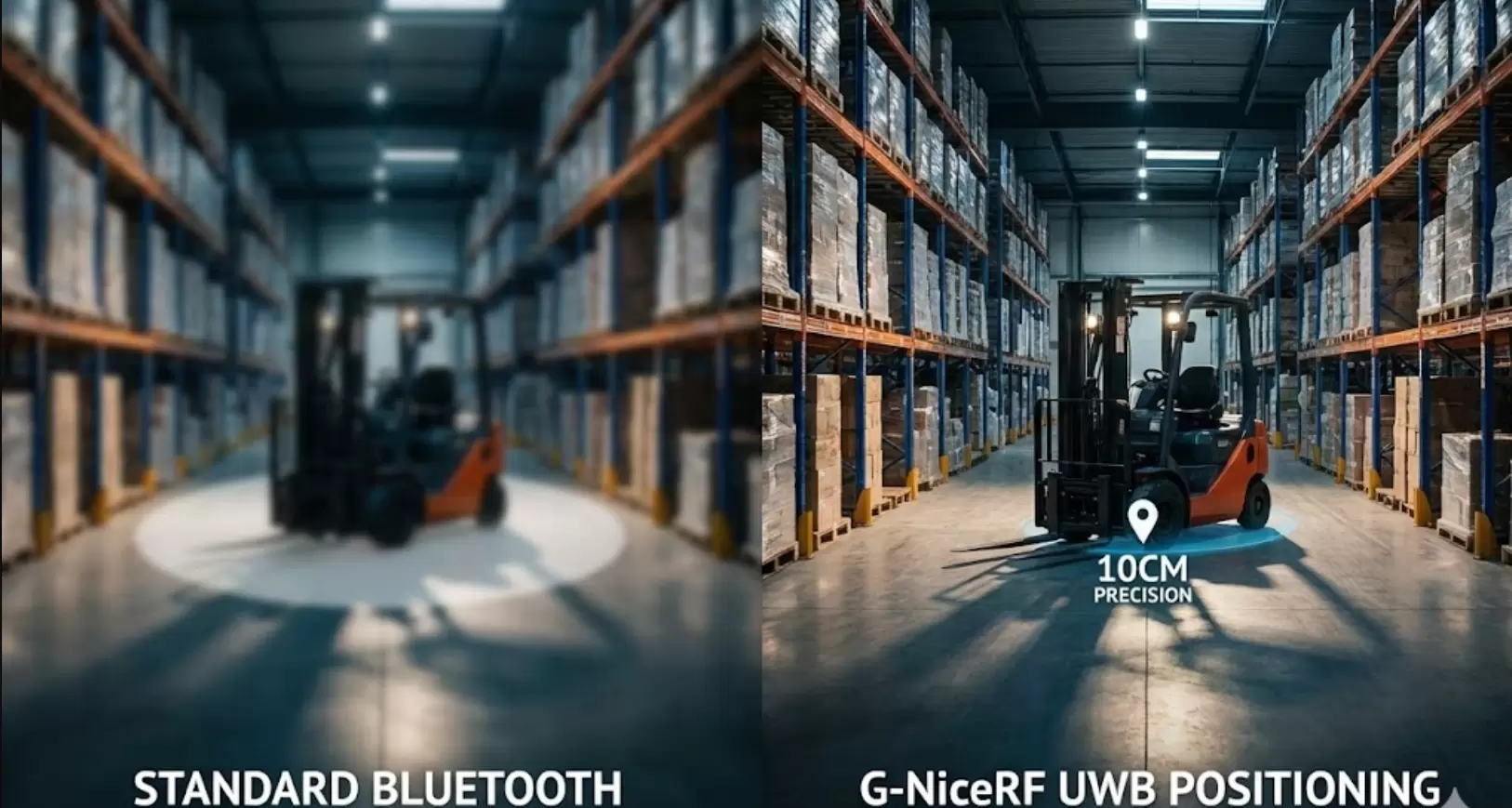
You will see why ultra-wideband technology is superior to standard wireless technologies. This comparison shows why it is better for industrial environments.
- Time Domain: UWB indoor positioning accuracy utilizes time within the time domain for precision.
- Angle Of Arrival: What is UWB tracking describes the improvement of direction through this mechanism.
- Signal Flight: The UWB positioning system measures the actual flight time of signals.
- No Interference: UWB indoor positioning technology ignores other noise signals and malfunctions completely.
- 1.5km Range: The real-time location system is designed to cover distances of 1.5km.
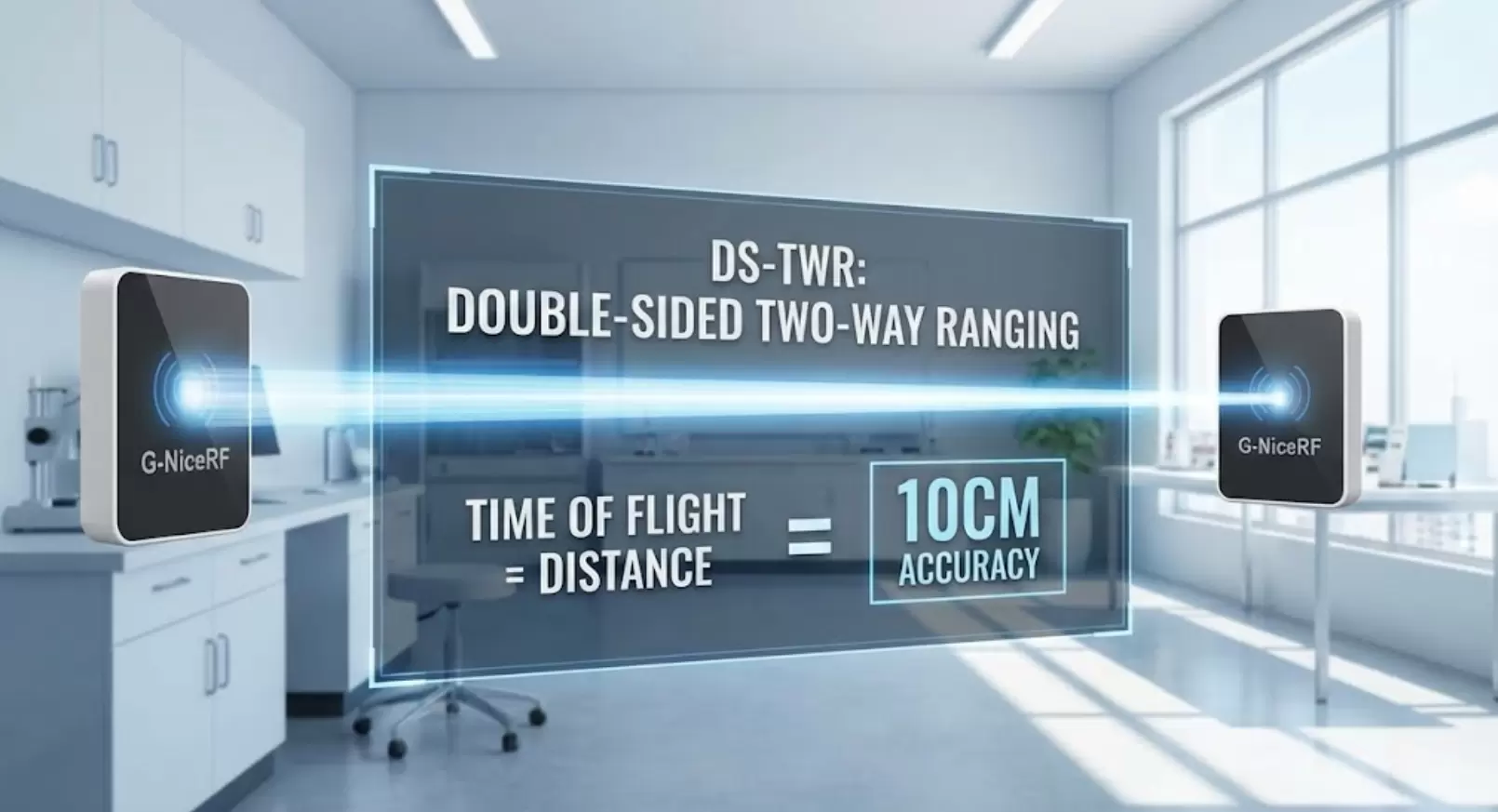
You will understand the many ways double-sided ranging techniques provide optimization. This ensures the highest possible measurement precision for you and your team.
You perform Double-Sided Two-Way Ranging to get the best possible data. This measures the time taken for the signals to make a round trip. This involves two messages to ensure the data is verified correctly. Furthermore, UWB tracking gets improved and becomes much more reliable for you.
Clock errors caused during each round trip are cancelled out completely. Accuracy is improved greatly in this method of UWB indoor positioning. Hence, distance is a data point you can rely on fully. This makes the positioning very superior to single-sided methods.
There is no other way that a system confirms its accuracy. It performs a thorough check of every single timestamp in the system. Nanoseconds are recorded for both the departure and the arrival intervals. Furthermore, packets are transacted in a unidirectional stance to help assuage conflicts.
A timestamp verification system is in place for your peace of mind. This is backed by principles of ultra-wideband positioning for better results. Hence, the reliability of the distance measured is guaranteed for you. This verifies the dependability of the system in every single instance.
In a real-time location system, you ensure that there is synchronization. Each of the devices harmonizes the internal system clocks for consistency. This helps in mitigating the drift effects that cause errors over time. Additionally, uniform ranging is achieved and temporal gaps are prevented effectively.
This helps in sustaining a stable system for long durations of time. Synchronization of time is vital for the accuracy of your tracks. Therefore, the values you measure correlate to the reality you see. Thus, you visualize tracks that are stable in motion.
The UWB indoor positioning module has a large packet size capacity. It supports 1023 bytes and is able to transmit bulk data packets. In addition to this, sent data contains information concerning the sensor. The payload is optimally maximized and this increases the rate of communication.
This module has a great bandwidth for your data heavy needs. Therefore, more data is transmitted and this enhances the efficiency of airtime. You optimize the airtime usage and the versatility of the link.
Your module values the privacy placed on what is UWB tracking data. It utilizes AES128 security which is a protective standard for data. This helps in avoiding any malicious or unauthorized access to location data. Furthermore, by blocking possible access, the system ensures safety for your operations.
The security is automatic and you do not need to worry. This helps you meet privacy requirements for your sensitive internal data. As stated by NiceRF, "The module supports AES-128 (Advanced Encryption Standard) encryption and decryption functions."
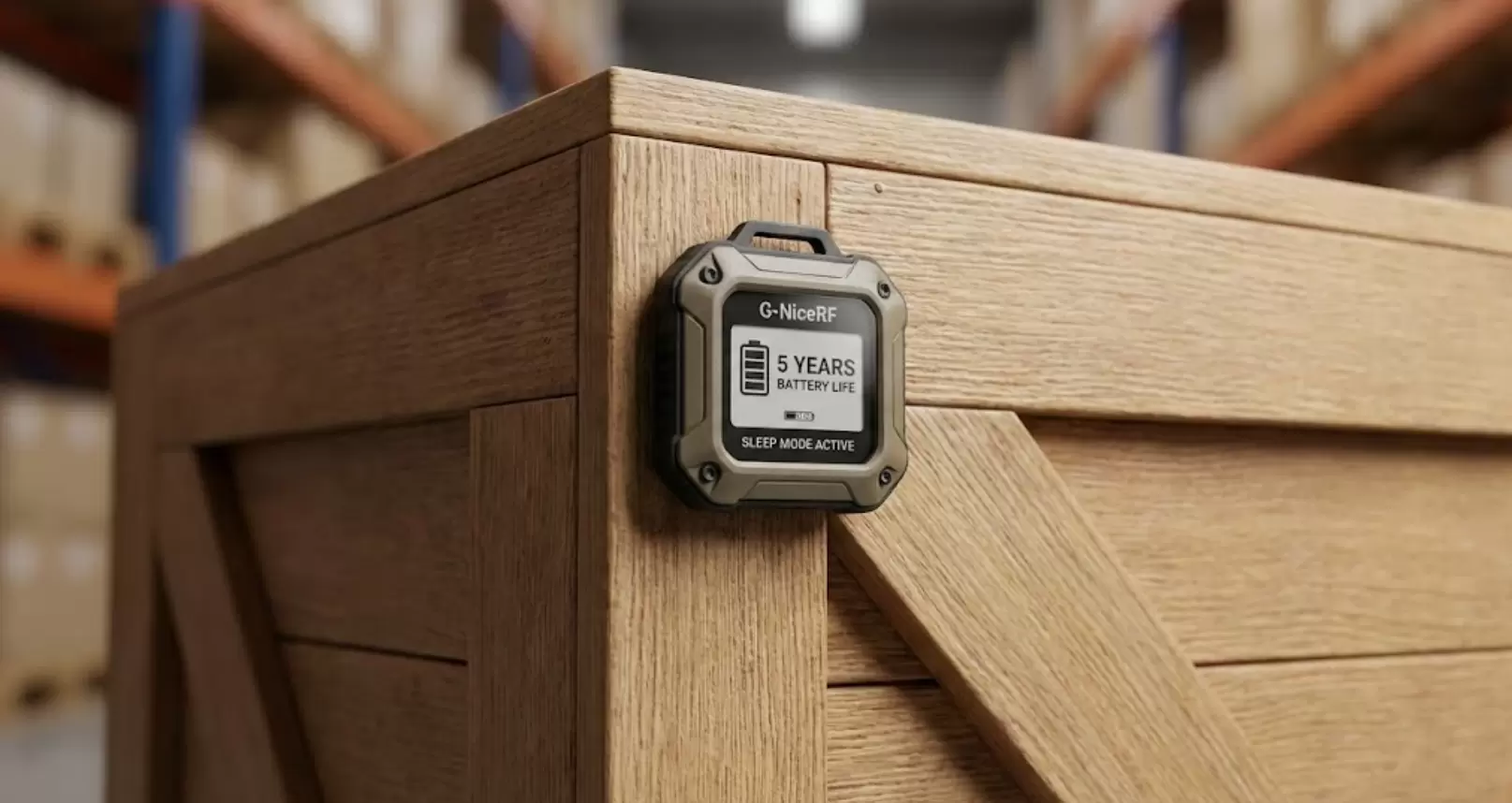
In this section, we expand upon techniques to maximize operational lifetime. You will learn to extend the life of your mobile tracking devices.
Power is conserved by the UWB indoor positioning system through sleep modes. The module supports sleep modes, specifically using microamp levels of power. Also, the chip rests often and this extends battery life significantly. Maintenance needs decrease and your team works on other things. This efficiency is extremely important for large scale industrial deployments. Therefore, the UWB tag is very effective and saves you money. You have to replace the batteries less often than before. I recall a project where switching to UWB saved the client thousands.
You set the intervals of UWB localization to save energy. Useless pulses are not sent when they are not needed. This lowers the active time the system is spending on transmission. Additionally, energy is saved by avoiding constant transmission in the system. Power drain is slowed and the battery lasts much longer. This is a very smart strategy for long term efficiency. Therefore, the system is eco-friendly and saves on consumable costs. The device can run cooler and lasts for a long time.
You receive the advantages of low UWB indoor positioning cost over time. The sleep current is under 100μA which is very low indeed. This is very fitting for the device and your power budget. Furthermore, you conserve a good amount of energy for the future. The devices will run for years without needing a change. This spec is very impressive for a high-performance device. This is what G-NiceRF helps you with in your operations. Operating costs are reduced and your bottom line improves.
The UWB anchor that you have is used well here. It can wake tags only when they are needed for tracking. This occurs only on demand and saves a lot of power. In addition, the tag sleeps longer and preserves its battery life. You determine the activity and you control the power usage.
Power is conserved and the system is more efficient. This is advanced technology that works for your benefit. Therefore, efficiency is improved and waste is mitigated in the system.
You let UWB positioning be flexible to your specific needs. It changes modes on its own based on the environment. In particular, it switches from sleeping mode to active mode automatically. In addition, it detects motion and activates only when necessary.
You obtain information while in motion and save power when idle. Power in the idle state is minimal and efficient. This change is fluid and does not require manual input. Therefore, you record all activity and you conserve energy.
Here are answers to some of the most popular questions. You can find answers regarding ultra-wideband technology and its deployment.
You have a choice on two UWB indoor positioning approaches. TWR is two-way ranging and it measures distance in a direct way. Additionally, TDoA is time difference and it determines position differently. You apply TDoA to have a bigger capacity for your system.
UWB localization scales up to meet your growing needs. TWR is used when one needs accuracy over large capacity. Therefore, make a choice on the correct mode for you. Thus, your system is more compatible with your specific goals.
You are able to utilize the UWB indoor positioning module easily. It is able to support UART transparent transmission for your data. This interface is straightforward and it interfaces with MCUs easily. Furthermore, you are able to send data quickly and integration is fast. This functionality is helpful and developers are able to save time. You prevent elaborate coding and the configuration is very fast. Therefore, your team can focus on other important tasks.
You are able to scale your UWB tracking network effectively. One anchor handles multiple tags in a busy industrial environment. In particular, it supports up to 30 tags at the same time. In addition, the capacity is high and supports your growth. You are able to track several assets and the system expands.
This UWB accuracy is maintained even with many tags present. Congestion is avoided and the data flow remains smooth. You are able to control busy regions with ease.
You work within particular UWB positioning bands for your system. The modules operate on Channel 5 which is 6489.6 MHz. In addition, some work on Channel 9 which is 7987.2 MHz. Thus, the ultra-wideband positioning is effective and very clear. You are able to avoid Wi-Fi interference in your building.
The signal is clear and the data is reliable. You are able to obtain accurate information every single time. Therefore, the connection is reliable and your operations run smoothly.
You ensure safety in UWB indoor positioning cost and security. Encryption is an important feature for your data privacy needs. AES128 is supported too and it is a standard today. Furthermore, it secures the payload and prevents any data leaks. You secure the link and you protect your business secrets. Thus, the data remains confidential and safe from prying eyes. This standard is solid and trusted by the industry. This is why G-NiceRF provides it for your peace of mind.
You have discovered the true value of accuracy because reliability improves safety greatly. Trust UWB indoor positioning for real success while deployment brings efficiency to your operations. You save costs on batteries and maximize your asset management now. G-NiceRF supports your specific needs, so visit our website for details. Contact us for expert help today.
 +86-755-23080616
 sales@nicerf.com
Website: https://www.nicerf.com/
Address: 309-315, 3/F, Bldg A, Hongdu business building, Zone 43, Baoan Dist, Shenzhen, China


Privacy Policy
· Privacy Policy
There is currently no content available
Email:sales@nicerf.com
Tel:+86-755-23080616